Advanced Two-Component Viscoelastic Damping Compound
For High-Performance Marine & Industrial Noise and Vibration Control
Product Description
RenDamp® 2K is a high-performance, two-component polyurethane-based viscoelastic damping compound, engineered to deliver exceptional reduction of structure-borne vibration and vibration-induced airborne noise in demanding marine and industrial environments.
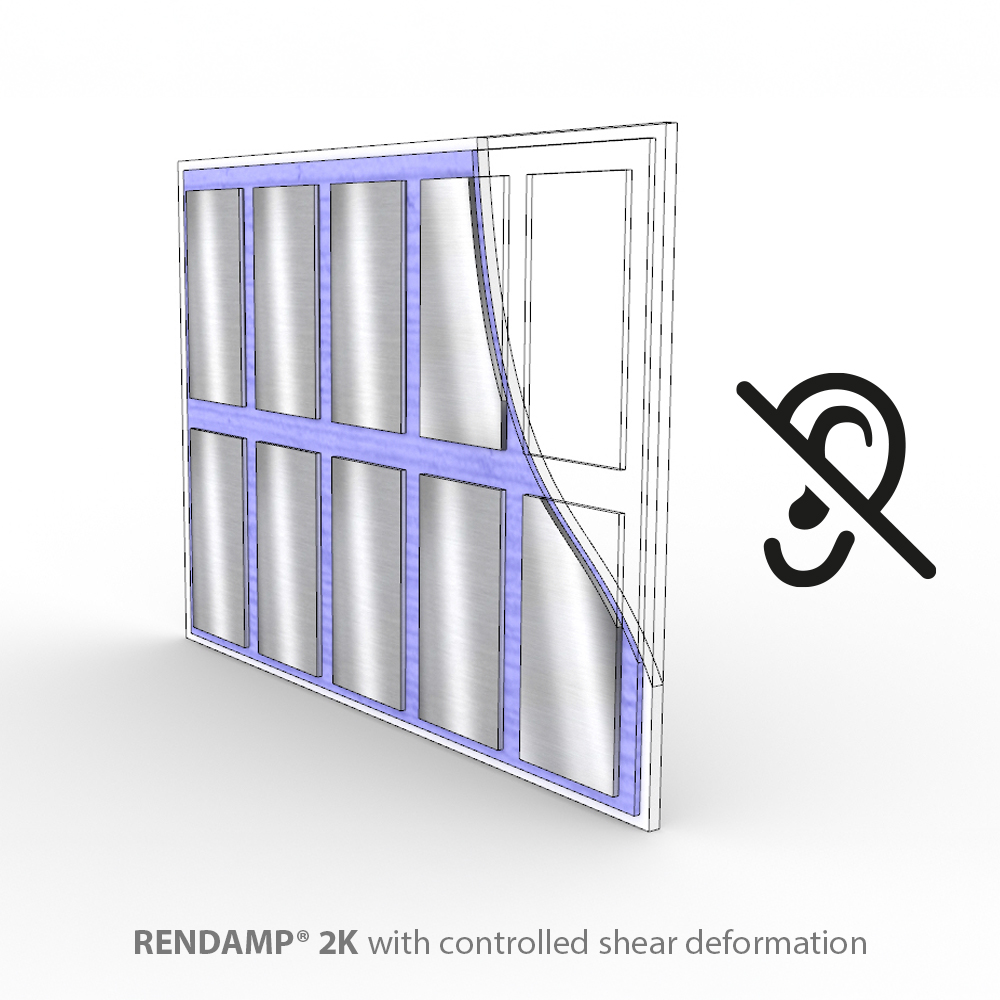
Developed specifically for constrained layer (sandwich) damping systems, RenDamp® 2K functions simultaneously as a vibration damping layer and a structural bonding medium, forming a durable viscoelastic interface between the substrate and the constraining counter-plate.
The product is optimised for applications where low-frequency excitation, resonance control and long-term durability are critical design requirements.
PRINCIPLE OF OPERATION – ADVANCED VISCOELASTIC ENERGY DISSIPATION
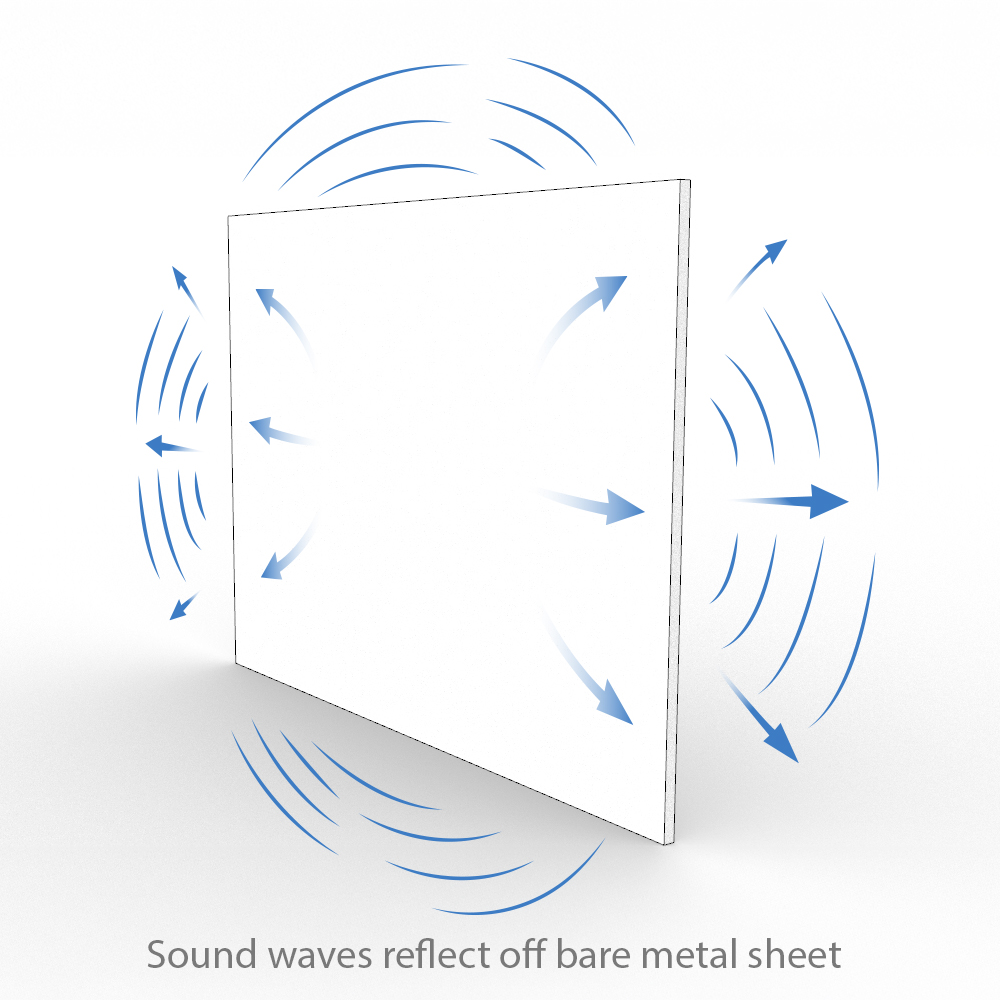
Mechanical excitation generated by engines, propulsion systems, rotating machinery, impact loads and footfall propagates through steel and composite structures. These vibrations are frequently transformed into radiated airborne noise, particularly at structural resonance frequencies.
RenDamp® 2K dissipates vibrational energy through controlled viscoelastic shear deformation, converting mechanical energy into heat and thereby:
- Suppressing structural resonance
- Limiting vibration transmission paths
- Reducing secondary airborne noise radiation
- Improving onboard acoustic comfort and habitability
The damping efficiency is maintained over a broad frequency and temperature range, ensuring reliable performance across varying operational conditions
KEY PERFORMANCE FEATURES
• Two-component polyurethane-based high-loss viscoelastic damping compound
• Designed for constrained layer damping (CLD) systems
• Highly effective reduction of structure-borne vibration and radiated noise
• Dual functionality: damping medium + structural adhesive
• Excellent adhesion to: Carbon steel, Aluminium, Stainless steel, Glass-reinforced composites
• Broad frequency effectiveness, including low-frequency excitation
• Highly thixotropic formulation – no slumping on vertical or overhead surfaces
• Resistant to: Seawater, Oils and fuels, Humid and corrosive marine environments
• Low odour formulation – suitable for confined and enclosed spaces
• Cures without shrinkage, cracking or loss of adhesion
• Lightweight damping solution with high structural efficiency
• Self-extinguishing behaviour and fire-safe material characteristics
FIRE PERFORMANCE & REGULATORY PERSPECTIVE
RenDamp® 2K has been developed with marine fire safety
requirements in mind and is suitable for use in areas subject to IMO fire performance evaluation when installed as part of an approved system configuration.
The product exhibits self-extinguishing behaviour and does not promote flame spread when correctly applied within sandwich constructions.
Final fire classification depends on the complete system (substrate + damping layer + counter- plate) and relevant IMO FTP testing protocols.
TYPICAL APPLICATIONS
Marine & Offshore
• Hulls, decks and bulkheads
• Engine rooms and machinery foundations
• Propeller and thruster-adjacent structures
• Floors and decks for impact noise reduction
• Accommodation and technical spaces
Industrial & Transport
• Generator and pump enclosures
• Heavy machinery foundations
• Rail and automotive structures
• Portable power units and equipment housings
SYSTEM CONFIGURATION – CONSTRAINED LAYER DAMPING
RenDamp® 2K performs optimally when applied in a sandwich (CLD) configuration, consisting of:
1. Structural substrate
2. RenDamp® 2K viscoelastic layer
3. Steel or aluminium constraining counter-plate
During curing, the compound bonds to both surfaces, forming a permanently elastic visco- structural interface that maximises damping efficiency while maintaining mechanical integrity
SURFACE PREPARATION
All substrates must be:
• Clean, dry and free from dust, grease, oil and loose coatings
• Steel surfaces should be mechanically abraded or
blast-cleaned
• Aluminium and stainless steel surfaces should be primed with a suitable wash primer
• Adhesion to existing coatings must be verified prior to application
All substrates must be:
• Clean, dry and free from dust, grease, oil and loose coatings
• Steel surfaces should be mechanically abraded or blast-cleaned
• Aluminium and stainless steel surfaces should be primed with a suitable wash primer
• Adhesion to existing coatings must be verified prior to application
MIXING & APPLICATION
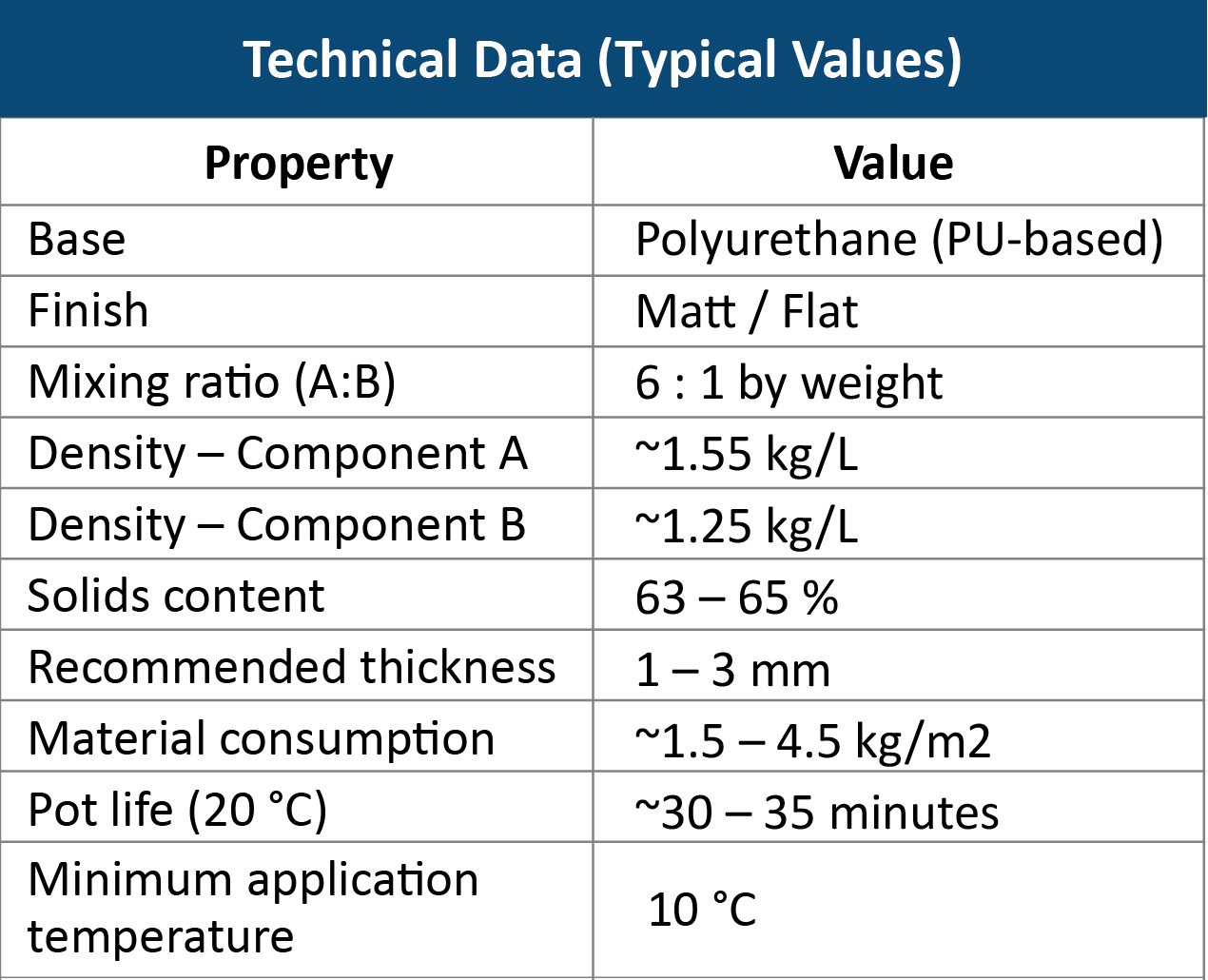
• Supplied in pre-measured combi-pack units
• Add Component B fully into Component A
• Mix with a slow-speed mixer (200–400 rpm) for
2–3 minutes until homogeneous
• Repot and briefly remix before application
• Apply using a trowel or filling knife
• Position the constraining plate into the wet compound and apply uniform pressure
Adequate ventilation and appropriate PPE are recommended during application and curing